
The Conflict Over Contractual Language in Kansas Education: An Overview
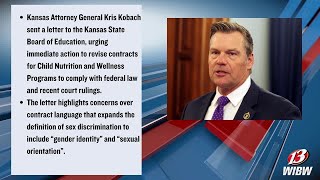
In recent weeks, Kansas education officials have found themselves caught in a legal tug-of-war over contractual language included in agreements for USDA food nutrition programs. On June 25, 2025, Kansas Attorney General Kris Kobach sent a strongly worded letter to the Kansas State Board of Education, urging the removal of nondiscrimination language that prevents discrimination based on gender, sexual orientation, gender identity, or expression. This case highlights the tricky parts of managing compulsory contract clauses and the tangled issues emerging when state policies clash with federal mandates.
At the heart of the matter is a language provision that, by design, is intended to safeguard public school students by ensuring that procurement contracts reflect inclusive values. However, the attorney general contends that including such language may run into problems with executive orders and precedent federal rulings. With an upcoming federal funding review looming over Kansas public schools, both legal and education leaders are left to figure a path through the maze of conflicting state and federal policy.
Understanding the Mandatory Contractual Provisions
The controversial language is not a free-standing initiative but a part of the mandatory contractual provisions set forth by the Kansas Department of Administration’s Office of Procurement and Contracts. These provisions are applied to almost all state contracts intended to secure goods and services. Including anti-discrimination policies in these agreements has been seen as critical by many who argue that public institutions, particularly schools, should lead by example in fostering an inclusive environment.
However, this language has also become the epicenter of heated debate. The attorney general’s argument is that the anti-discrimination clause could potentially conflict with other federal executive orders. For those unfamiliar with these legal twists and turns, it might seem like just another bureaucratic detail. Yet, as this dispute shows, even subtle parts of contractual language can have far-reaching implications.
Historical Backdrop and the Evolution of Procurement Policies
To really get into the nitty-gritty of the issue, one must consider the evolution of procurement policies within state government. Over many years, mandatory contractual provisions have been developed to reflect both state priorities and federal requirements. These provisions are implemented by agencies like the Kansas Department of Administration, and any change requires careful consideration and often, a top-down directive from state leadership.
Historically, educational policy in Kansas has balanced traditional values with ongoing trends towards greater equity and inclusion. The presence of a provision that explicitly prohibits discrimination in contracts is seen by some as a natural extension of efforts to make schools a safe and welcoming space for every child. Yet, when a request arises to eliminate such a clause, it forces policymakers to take a closer look at balancing legal obligations with public values.
Key Timeline of Recent Events
Understanding the timeline of events helps to demystify the ambiguous bits of this controversy. Below is a summary of the critical dates and actions that define the current dispute:
- June 25, 2025: Kansas Attorney General Kris Kobach sends a letter to the State Board of Education, demanding the removal of the anti-discrimination clause from contracts with Kansas public schools in USDA food nutrition programs.
- July 3, 2025: A meeting is held among representatives from the governor’s office, Kansas Department of Administration, the Kansas State Department of Education (KSDE), and the State Board. During this session, KSDE and the State Board clarify that they are bound by mandatory state procurement laws, and any contractual changes must be approved by the Department of Administration.
- July 7, 2025: The attorney general reiterates his position in a follow-up letter, once again emphasizing his concerns about potential risks to federal funding due to the enforcement of such anti-discrimination language.
This timeline shows a clear progression from the issuance of the letter to subsequent meetings and further correspondence, indicating that the situation remains dynamic and unsettled.
Legal and Policy Implications for Kansas Public Schools
At first glance, some might see the attorney general’s request as a straightforward legal maneuver. However, the situation reveals several layered issues that extend well beyond legal technicalities. The debate over contractual language has made headlines not just because of its potential impact on federal funding, but also because it touches on the broader question of how schools should handle discrimination policies.
Federal Funding and the Risk of Disqualification
One primary concern raised by the attorney general is the risk that the presence of anti-discrimination language in state contracts might jeopardize the disbursement of federal funds. The logic is that if a state contract is perceived as conflicting with federal executive orders, it could trigger a withholding of critical funding aimed at supporting programs like the USDA food nutrition initiative.
For many public schools, federal funding is not just an additional supplement to their budgets—it is a must-have component that supports essential educational and nutritional programs for children. In this context, even a minor misstep in contractual language could have intimidating financial consequences. The fear is that failure to align with federal expectations might result in a loss of funds that are needed to support some of the state’s most vulnerable student populations.
Balancing State Policies with Federal Directives
The tug-of-war between state policies and federal directives has consistently been an off-putting challenge for education leaders in Kansas. The conflict over the mandatory nondiscrimination provision is a prime example of this struggle. On one hand, state agencies are expected to follow the guidelines established by the Kansas Department of Administration, which has finalized this language as a part of state procurement practices. On the other hand, emerging federal interpretations require strict adherence to executive orders, which may be interpreted as conflicting with these state mandates.
This situation leaves policymakers with a nerve-racking balancing act. They must figure a path that satisfies both state procurement laws and federal expectations, all while ensuring that the rights of students and educators are preserved. The process is akin to trying to steer through a storm where every decision has multiple layers of implications and each one carries its own potential for unintended fallout.
Impact on Educational Equity and Inclusion
Beyond the legalistic debate, the issue speaks to a central value that many educational stakeholders hold dear—the commitment to equity and inclusion in our public institutions. At its core, the anti-discrimination language is intended to affirm the rights of every individual, ensuring that schools are safe spaces free from bias and exclusion. It sends a clear signal that every student, no matter their background or identity, deserves an environment where they can learn and thrive.
Critics of removing this language argue that stripping away such provisions undercuts years of progress toward greater inclusivity in schools. They point out that policies that prevent discrimination are not only symbolic but also essential in promoting a culture of respect and understanding. For educators and parents alike, this is not a trivial matter; it is a super important aspect of school governance that touches on the very heart of what education should be about.
State Administration and the Role of the Kansas Department of Administration
In this intricate scenario, the Kansas Department of Administration finds itself in a pivotal position. As the body responsible for formulating and enforcing mandatory contractual provisions, it is charged with upholding state procurement laws that have been in place for years. The department’s policies reflect a long history of attempts to create uniform standards that apply across all state contracts, making any proposal for change a matter requiring careful review.
Understanding the Chain of Command
The structure of governance in Kansas education ensures that any changes to these established provisions cannot be undertaken lightly. Representatives from different agencies, including KSDE, the governor’s office, and the State Board of Education, have all stated that they must comply with the procurement guidelines set forth by the Department of Administration. This chain of command ensures that modifications do not occur on an ad hoc basis but rather through a formal revision process.
The following bullet list outlines the key players and their roles in this process:
- Kansas Department of Administration: Drafts and implements mandatory procurement language for state contracts.
- Kansas State Board of Education: Oversees education policy but must adhere to broader state procurement laws.
- Kansas State Department of Education (KSDE): Implements policies and collaborates with schools while remaining bound by procurement requirements.
- Kansas Attorney General’s Office: Provides legal opinions that influence state policy and outlines potential legal risks.
This clear delineation of responsibilities means that any call for change—like the one issued by the attorney general—must traverse multiple layers of governmental oversight. It is a process that, while designed to ensure accountability, can also be frustratingly slow when urgent issues arise.
Challenges of Reforming Established Procedures
Changing a policy that has been in place for so long is not simply a matter of adjusting a few words. It involves a careful assessment of the small distinctions between legal interpretations at the state and federal level. Moreover, any reform initiative must consider the long-term impact on both the financial health of public schools and the broader public trust in state institutions.
For those working within the system, the request to remove anti-discrimination language is seen as yet another example of how federal and state priorities can sometimes conflict in ways that are downright intimidating. Even if the proposed changes are minor on paper, they carry potentially overwhelming implications ranging from funding jeopardies to eroding public confidence in the inclusivity of our education system.
The Broader Implications for Public Education
As this debate continues to unfold, it is important to consider the broader implications for public education in Kansas. Beyond the specifics of contractual language, this case spotlights how educational policy is increasingly caught in the crosshairs of political, legal, and social forces. The dispute over anti-discrimination provisions is just one of many areas where educators must contend with a web of federal and state directives.
The Importance of Consistency in Policy Implementation
One of the key points of contention in this debate is the need for consistent policies that schools can reliably count on. Educators and school administrators must be able to plan for the future without the nagging worry that a change in federal or state leadership will suddenly alter the rules of the game. Consistency is especially key when it comes to funding—a few wrong words in vital documents can translate into a significant shortfall in resources.
Many school leaders argue that maintaining the existing nondiscrimination language not only upholds core values but also protects the stability of programs that depend on federal support. If schools are forced to revise their contracts under duress, it could lead to a cascade of administrative complications and uncertainty that affects day-to-day operations. For school boards, it is a matter of ensuring that every policy decision contributes to a stable and predictable environment for both students and staff.
Implications for Inclusive Education Initiatives
Beyond funding and administrative concerns, the debate has important social implications. Education is not just about imparting knowledge; it is also about building communities that respect differences and celebrate diversity. The inclusion of clear anti-discrimination language in state contracts has been one method of affirming these goals.
Removing the language might be perceived as a retreat from the commitment to promoting diversity and equality. In a state like Kansas—where recent years have seen vigorous debates about educational equity—such a move could fuel concerns among educators, parents, and minority communities alike. The decision on this matter, therefore, carries symbolic weight in addition to its practical consequences.
Working Through the Legal and Policy Maze: Potential Paths Forward
Given the tangled issues at hand, it is imperative that state leaders and educators work together to find a solution that both complies with mandatory procurement laws and supports the inclusive values that many families expect from public schools. Although the situation is full of problems and loaded with legal ambiguity, there are several productive steps that can be taken.
Collaborative Dialogue Between Agencies
One promising path involves fostering more robust communication between the key entities involved—from the Kansas Department of Administration to the State Board of Education and KSDE. Open channels of dialogue can help all parties understand the fine shades of federal requirements while preserving the state’s commitment to anti-discrimination. In recent discussions, representatives have already indicated that any alterations to the language must be handled by the Department of Administration, a fact that underscores the need for coordinated efforts.
A table outlining potential discussion points in upcoming interagency meetings might look like this:
| Topic | Key Considerations | Stakeholders |
|---|---|---|
| Compliance with Federal Directives | Ensuring anti-discrimination language does not conflict with federal executive orders | Attorney General, Department of Administration, KSDE |
| Preservation of Inclusive Policies | Maintaining a commitment to equity in public procurement | State Board of Education, Local School Districts, Advocacy Groups |
| Financial Security | Preventing disruption of crucial federal funding linked to USDA programs | Schools, State Budget Office, Department of Administration |
| Long-Term Policy Stability | Developing processes for future updates that involve all relevant parties | Lawmakers, Educational Leaders, Legal Experts |
By using such a table as a roadmap, agencies can take a closer look at both the little details and the big-picture concerns that are crucial to resolving this issue.
Engaging Stakeholders at the Local Level
While high-level discussions are essential, administrators and educators on the ground also have an important role to play. Local school boards, parents, community organizations, and even students can contribute valuable insights into how these policies affect the day-to-day functioning of schools. Their perspectives can help state officials appreciate the human impact of legal and contractual ambiguities.
Organizing community forums and stakeholder meetings may be one way to collect this feedback. These sessions can serve as platforms where parents and educators share experiences about how contractual provisions impact classroom practices, school culture, and student well-being. In doing so, state officials could better assess how changes to the mandatory language might ripple through the education system.
Exploring Alternative Policy Solutions
Another potential approach involves exploring alternative policy solutions that reconcile federal legal requirements with the state’s commitment to inclusivity. For example, rather than removing the controversial provision altogether, policymakers might consider modifying the language in ways that satisfy both federal and state legal interpretations.
Some options could include:
- Revisiting the wording to ensure compatibility with executive orders while still affirming inclusive values.
- Designing supplemental guidelines that clarify how the clause will be implemented in practice, thereby reducing confusion.
- Establishing a review board with representatives from all involved agencies to monitor compliance and recommend periodic updates.
These proposals, though not without their own tricky parts, offer a middle-ground solution. By taking a collaborative approach, Kansas could transform a potentially divisive issue into an opportunity to set a precedent for how state policies can adapt without compromising on core commitments.
Reflecting on the Broader Educational Landscape in Kansas
The current controversy over contractual language is emblematic of the broader challenges that many states face today. From shifting federal directives to evolving public attitudes about equity and inclusion, educational leaders in Kansas are operating in an environment replete with unexpected twists and turns. The debate further underscores the importance of having policies that are not only legally sound but also reflective of the values that underpin public education.
In many ways, this situation serves as a reminder that policy decisions are rarely straightforward. They often sit at the intersection of legal obligations, financial realities, and community values—an intersection that requires careful thought and measured action. As Kansas continues to work through these issues, educators and policymakers alike will need to remain both vigilant and adaptable.
Impacts on Stakeholder Confidence and Trust
For parents and educators, trust in the system is built on the certainty that policies are applied uniformly and in a manner that respects the rights of all individuals. Disputes like the current one can unsettle this confidence if stakeholders feel that important values are being compromised in the interest of bureaucratic expediency.
Maintaining transparency throughout the negotiation and decision-making process will be essential. One way to foster trust is by keeping lines of communication open and ensuring that every stakeholder has access to information regarding potential policy changes. By doing so, the state can demonstrate that it is both accountable and responsive to the concerns of its constituents.
Reaffirming the Mission of Public Education
At its core, the debate over contract language is about more than legal compliance—it is about reaffirming the mission of public education. Schools have long been seen as engines of opportunity, cultural understanding, and social progress. The presence of clear anti-discrimination provisions in state contracts symbolizes a commitment to these ideals and provides a foundation upon which inclusive educational environments are built.
In preserving such policies, Kansas not only adheres to legal standards but also sends a strong message about the kind of society it aspires to be—one where every student is given an equal opportunity to succeed, regardless of background or identity. This is a message that resonates deeply with communities that have long advocated for fairness and equality in education.
Looking Ahead: The Future of Policy Reform in Kansas Education
As this debate unfolds, it is clear that the issue is far from settled. In the coming months, educators, state officials, and legal experts will continue to engage in discussions intended to craft a resolution. The process promises to be both a test of Kansas’ legal frameworks and an exploration of the subtle parts that underpin its commitment to educational equity.
Policymakers face an overwhelming task: they must figure a path that bridges the gap between rigid procurement laws and the need for progressive inclusion. Every step they take will likely be scrutinized—by advocates on both sides of the debate, by local communities concerned about federal funding, and by legal experts analyzing the ramifications of their decisions.
Future Steps and Potential Outcomes
In considering what the future may hold, several possible outcomes can be anticipated:
- Revision of Contractual Language: A refined version of the anti-discrimination clause that meets both federal legal standards and locally endorsed values.
- Enhanced Interagency Collaboration: A formal framework for ongoing dialogue between the Kansas Department of Administration, KSDE, the State Board of Education, and the Attorney General’s Office to resolve similar issues in the future.
- Policy Safeguards: The establishment of oversight mechanisms designed to monitor the implementation of contractual provisions and their impact on federal funding.
- Increased Stakeholder Engagement: Initiatives that ensure local educators, parents, and community groups have a voice in shaping education policies that affect their children.
Each of these outcomes presents its own set of challenges and advantages. Nevertheless, they all share the common goal of realigning the state’s policies with its broader vision of inclusive, high-quality public education.
Potential Long-Term Benefits for Kansas Schools
If Kansas can successfully regulate these opposing forces by taking a measured and inclusive approach, there may be long-term benefits for schools across the state. Such benefits could include:
- A more stable source of federal funding, ensuring that vital nutrition and educational programs remain uninterrupted.
- Increased clarity for school administrators who operate under clear and consistent contractual guidelines.
- Enhanced community trust in the state’s education system, as decisions are made transparently with stakeholder input.
- A model for other states grappling with similar issues, demonstrating that even tricky legal matters can be worked through collaboratively.
By addressing these challenges head-on, Kansas has the potential to set a new standard in how state policies can both protect legal interests and uphold the mission of public education.
Conclusion: Reflecting on the Future of Policy and Public Trust
The current dispute over mandatory contractual language in Kansas public schools is a vivid example of the tangled issues that arise when state and federal policies intersect in unexpected ways. The situation is replete with fine points and little twists that carry far-reaching implications—not just for legal compliance, but for the everyday lives of students, teachers, and families.
As state officials and educators take a closer look at the matter, their challenge will be to reconcile the need for consistent, federally compliant policies with the unyielding commitment to inclusion and equity. Even as debates continue and legal interpretations evolve, one thing remains clear: public education in Kansas—and indeed across the nation—depends on trust, transparency, and a steadfast dedication to the values that make our schools safe havens for learning.
In the end, the resolution of this issue will not merely be about changing a few words in state contracts; it will be about ensuring that Kansas’ children and educators can continue to count on a system that both protects their rights and prepares them for a future in a diverse and dynamic society. The coming months will show whether Kansas can steer through this nerve-racking landscape and emerge with policies that are both legally robust and reflective of the state’s long-held commitment to fairness and educational excellence.
For educators, policymakers, and community members alike, this is a time to engage, discuss, and contribute to a decision that will affect public education for years to come. As Kansas moves forward with managing its way through these challenging legal and administrative waters, the hope is that cooperative dialogue and thoughtful reform will pave the way for a brighter, more inclusive future in education.
Originally Post From https://www.ksde.gov/Home/Quick-Links/News-Room/ArtMID/3386/ArticleID/4404/KSDE-responds-to-Kansas-Attorney-General%E2%80%99s-call-for-contract-language-change
Read more about this topic at
Conflicting Language Clause Examples
Conflicts Contract Clause Examples