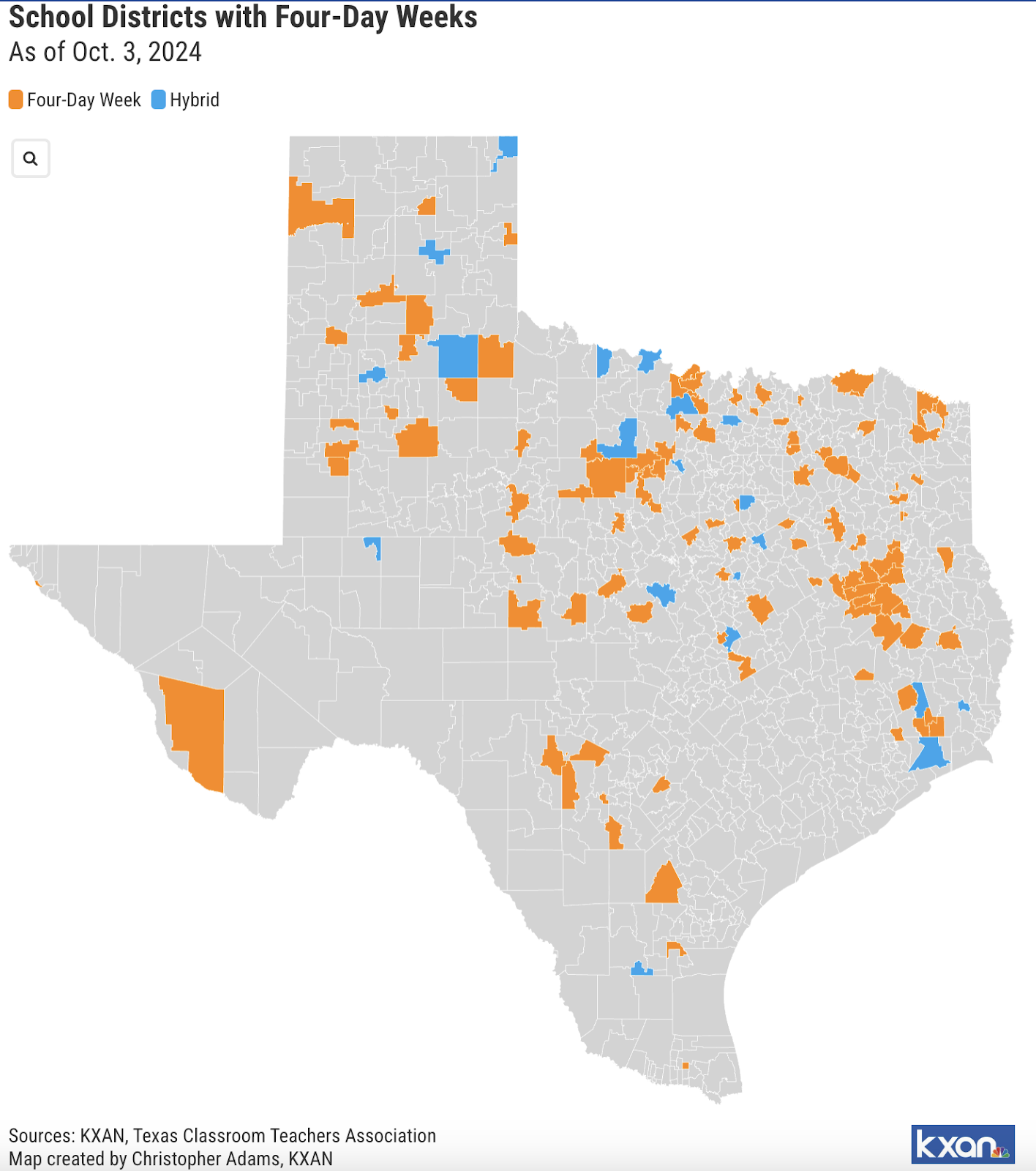
Four-Day School Weeks in Texas: A Trend with Mixed Outcomes
Across Texas, a growing number of school districts are turning to four-day school weeks as a creative way to manage tight budgets and attract quality teachers. As educators, families, and policymakers navigate this condensed schedule, the discussion is full of twists and turns—ranging from teacher recruitment challenges to potential impacts on student learning. In this opinion editorial, we take a closer look at the reasons behind the shift, the benefits and concerns it raises, and what it might mean for the future of public education in Texas.
Rural Districts and Budget Constraints: A Fair Trade-Off?
In rural districts such as Woodson Independent School District, fewer resources and smaller budgets have led school leaders to experiment with four-day weeks as a way to offer a teacher perk when financial incentives aren’t an option. With urban districts often able to offer more enticing salary packages, rural areas have faced a tense situation that requires creative solutions. As Superintendent Casey Adams explains, “Better the teacher, the better the student’s outcomes. And so we knew if we wanted to improve education for our district, we had to be able to attract and keep really good staff.”
This model initially emerged as a means to ease the strain of a statewide teacher shortage. By reducing the number of days on campus, school leaders hoped to create a work-life balance that would encourage educators to join and remain in districts that otherwise struggle to compete with the financial muscle of their urban counterparts.
While the idea might seem simple, the decision was full of tricky parts and tangled issues. On one hand, the move helped districts save money on transportation, support staff, and even food costs. On the other, concerns about maintaining quality education and meeting statewide standards added a layer of complexity to the decision-making process.
Teacher Recruitment and Retention: Is More Free Time Enough?
The shift to a four-day week has often been seen as a clever alternative to offering higher paychecks—a strategy aimed at making a school district more attractive to potential hires. In many districts, especially those in more rural parts of Texas, teacher shortages have been intensified by years of stagnant state funding. When confronted with the reality of limited financial resources, school leaders have had to figure a path that helps lure teachers with a promise of extra personal time rather than just a bigger paycheck.
Educators working in these districts have expressed appreciation for the extra day off, reporting that it helps them manage personal errands and spend quality time with their families. High school teacher Roni Mills, for example, mentioned that the condensed schedule has not only spurred a better classroom dynamic—where students seem more engaged—but has also allowed her to develop stronger relationships with dual-credit students.
However, it is important to recognize that research from other states reveals that this incentive might be more superficial than substantive. Though the four-day week can boost morale, evidence indicates that an extra day off might not be enough to outweigh other factors, such as salary, when it comes to recruiting and retaining top educators. Many experts argue that while the shortened schedule is helpful, the underlying financial challenges and long-standing funding gaps still need to be addressed in order to create a truly sustainable solution.
Managing Family Concerns: Childcare and Meals on the Edge
One of the most pressing worries when schools cut a day from the traditional week is the impact on families. Initially, parents expressed concerns over the potential loss of reliable childcare and the disruption of essential school-provided meals. For instance, some families feared that with one less school day, children might miss out on nutrition programs that many rely on, or that parents would struggle with arranging unexpected childcare every week.
Over time, however, many families have adjusted to the new routine. Districts have responded to their concerns by providing creative solutions—such as offering sack lunches for students during the extended weekend. In addition, some schools have partnered with local organizations and community members to offer childcare services on the extra day off. With a little planning and support from extended family or local resources, many parents have found that the four-day week, while initially intimidating, ultimately works in their favor.
This experience of transition shows that while making a substantial change to a school schedule can be nerve-racking at first, with adequate support, both students and parents can develop routines that safeguard education and well-being. Still, the challenge remains for districts to ensure that the new model does not inadvertently widen the gap for families who might lack the resources to adjust quickly.
Shortened Weeks and Classroom Time: A Closer Look at the Opportunities and Risks
A frequent point of discussion is the academic impact of compressing school weeks into four days. At first glance, dedicating longer periods to each subject seems like a promising way to ensure that students still receive the same amount of instruction. In theory, spending more minutes per class should allow for deeper engagement with the material, and indeed, some teachers report that their students are more focused and motivated during class time.
However, evidence from both Texas Education Agency (TEA) studies and research conducted in other states indicates that the change may have mixed academic outcomes. For example, studies have shown that districts using a four-day model sometimes register slight declines in standardized test scores, particularly in subjects like reading and math. Critics argue that these small differences—though at times statistically insignificant—could add up to a loss of several weeks of learning over the course of a school year.
Moreover, the decision to condense lessons into longer sessions poses a set of confusing bits and subtle parts that require careful planning. Teachers must figure a path through the nitty-gritty of curriculum design to ensure that the extra time does not lead to information overload or diminished engagement, particularly for younger or special-needs students. As such, while the idea of longer classes is promising, it is not a magic bullet for solving all educational problems.
Academic Performance: Mixed Results and Hidden Complexities
One of the more contentious aspects of the four-day week debate is its influence on student achievement. Data released by state agencies has suggested a slight dip in STAAR test scores in districts that have adopted the four-day model compared to those following the traditional schedule. This observation has raised concerns among parents, educators, and policymakers, who worry that the condensed week might leave students rushed or underprepared for high-stakes assessments.
Yet, the situation is not entirely black and white. In some cases, districts that have been relying on the four-day schedule have reported improved engagement in extracurricular activities and better overall morale among students. Superintendent Adams of Woodson ISD points to an increase in participation in dual-credit classes and other enrichment programs as evidence of the model’s positive aspects. Even families of students with special needs have observed improvements in academic performance once they adjusted to the new routine.
A recent TEA study noted that while the differences in test scores might be small, it is essential to weigh these against the potential benefits of extra rest, reduced burnout, and improved teacher morale. For many, the trade-offs are worth the risk, particularly when balanced against the continuing challenge of insufficient state funding.
Policy Decisions and Financial Impacts: Beyond the Classroom
The decision to shift to a four-day school week is rarely made on academic grounds alone. Many districts cite financial pressures—stagnant state funding combined with rising costs—as the driving force behind their move. In recent years, Texas lawmakers have been involved in high-stakes debates over school vouchers and education funding, leaving many districts without the crucial financial support they need. For instance, in 2023, a contentious battle over school vouchers disrupted a bill that might otherwise have provided modest increases in teacher salaries and alleviated some financial strains.
Legislative measures such as House Bill 2610 granted school districts the flexibility to modify their calendars, allowing for adjustments like the condensed school week. Additionally, House Bill 2 later brought a significant funding boost to public education, including salary raises with larger increases for rural teachers. However, even these new funds cannot fully compensate for years of underinvestment, leaving many administrators to wonder if the four-day week is merely a band-aid rather than a long-term solution to deep-rooted fiscal challenges.
More often than not, the decision to adopt a shorter week is driven by a mix of strategic necessity and creative problem-solving. While the benefits in terms of operational savings are clear—reduced transportation, lower utility costs, and less spending on food—it is critical to look at the broader picture. Policymakers and education leaders must work through these confusing bits of budgeting and educational quality simultaneously to ensure that short-term savings do not lead to long-term academic struggles.
Rural Versus Urban Environments: Telling Tales of Two Systems
The challenges faced by rural districts in Texas are distinct from those encountered by urban schools. Urban districts typically command larger budgets, a more robust tax base, and easier access to advanced educational resources, while rural districts often operate on leaner budgets and face additional hurdles such as limited transportation infrastructure and fewer specialized staff members.
When asked about the merits of the four-day week, administrators from rural districts frequently highlight the potential for the model to ease long-standing recruitment and retention issues. In contrast, urban districts rarely need to consider a shortened schedule solely as a recruitment perk because they can generally lure talent with higher salaries and more comprehensive benefits.
This disparity has led to a situation where the four-day model appears as a uniquely rural strategy, although some urban districts facing budget pressures in other states have also implemented similar policies. The underlying reasons are often full of problems—ranging from funding shortages to the need for flexible scheduling in response to extreme weather events. However, despite these challenges, the spirit behind the innovation remains the same: to offer schools a way to balance financial sustainability with the goal of providing quality education.
Practical Benefits: Extra Time for Rest, Enrichment, and Family
Supporters of the four-day school week often emphasize the positive outcomes beyond the classroom. For many teachers, the extra day off translates into the opportunity to catch up on lesson preparation, pursue professional development, and address personal affairs. This balance not only boosts teacher morale but also can lead to more effective teaching when classes are in session. For high school students juggling dual-credit classes, the extra day allows them to focus on assignments, participate in enrichment activities, and seek additional guidance from teachers when necessary.
The four-day model also presents practical benefits for families. As one parent noted, once routines were established, arranging childcare or adjusting work schedules became manageable. In response, many districts have set up support systems, including community-childcare programs and extended meal services, to help ease the transition. Although the shift was nerve-racking at first, the experience has shown that with proper planning and community support, families can effectively adapt to a condensed school week.
- Reduced operational and transportation costs can free up funds for other educational needs.
- Teachers enjoy a built-in day for planning and personal errands, which may boost overall classroom performance.
- Students benefit from longer class sessions that encourage deeper engagement, provided that instructional methods adapt effectively.
- Parents and caregivers gain flexibility, particularly when schools offer supportive measures such as meal programs and childcare services.
Challenges in Adjusting: The Hidden Complexities of a Compressed Schedule
While the four-day week brings several tangible benefits, it is not without its challenges. One of the most significant concerns is the potential drop in academic performance, as noted by early TEA studies. Critics warn that even small declines in standardized test scores could signal deeper issues related to learning retention, particularly in critical subjects like math and reading.
Another worrying aspect is the impact on students who require additional support. For children with special needs or those dealing with conditions such as ADHD or autism, the modified schedule might disrupt established routines—especially in the early stages of the transition. Although some families have reported improvements once a new routine is settled, educators and parents alike must be cautious about ensuring that every child’s needs are met in a timely and compassionate manner.
Additionally, the longer class sessions require teachers to rework classroom management and lesson delivery strategies. This reworking is full of confusing bits and subtle parts that can vary significantly from one classroom to another. Teachers must adjust by finding their way through the nitty-gritty of extended lessons while ensuring that each minute counts. For those unaccustomed to such formats, the transition might remain intimidating until a new rhythm is formed.
Parent and Educator Perspectives: What the Community Really Thinks
Feedback from teachers, parents, and students has been generally positive once the initial hurdles are overcome. Educators often remark that although the adjustment period is nerve-racking, the resultant boost in morale and classroom engagement makes the change worthwhile. Many teachers have mentioned that extra days off help them avoid burnout, leading to a more balanced approach to lesson planning and classroom management.
Parents, too, have found reasons to appreciate the shortened week after making necessary arrangements. For example, one grandmother and guardian, who initially feared the impact of the schedule on her grandchildren with autism and ADHD, later observed improvements in their academic performance and overall mood. Once the routine was established, the extra day off provided a valuable opportunity for the children to catch up on school work and decompress from the week’s stresses.
Here is a summary of community feedback based on interviews:
| Stakeholder | Feedback |
|---|---|
| Teachers | Report enhanced focus in class and a better work-life balance, although some note longer sessions can be challenging to manage initially. |
| Parents | Express initial concerns over childcare and missed meals, but many eventually adapt and even appreciate the extra day for family time and planning. |
| Students | Generally show improved morale and engagement, particularly noting that they value classroom time more when it is limited. |
This collective testimony highlights that while the path to adapting a four-day week is full of little twists and subtle details that must be carefully managed, the overall experience can be positive when supported by community-wide efforts and smart policy choices.
Innovative Scheduling: A New Era for Work-Life Balance in Schools
The shift toward a four-day school week is not merely about cutting costs—it represents a broader rethinking of how a school should function. For many school board members and district administrators, the model underscores the importance of flexible scheduling that benefits teachers, students, and families simultaneously. This approach reflects a pragmatic response to several financial challenges and the ongoing battle to recruit and retain quality staff in the face of urban competition.
Many proponents argue that a compressed schedule fosters a more vibrant school environment. With an extra day for planning, teachers can prepare more engaging lessons and potentially explore innovative teaching methods that might be too time-consuming during a traditional five-day week. Meanwhile, students benefit from longer instructional periods that can support more in-depth discussions and hands-on learning activities. This more concentrated way of interacting is seen as a way to improve overall student participation without sacrificing educational content.
Of course, such changes are not without risk, and it is essential for districts to continuously monitor academic progress and adjust teaching methods accordingly. In a time when education policy is constantly evolving, any significant scheduling change must undergo regular evaluation to ensure it continues to serve the academic and social needs of its students.
Balancing Extra Time Off with Instructional Time: Weighing the Pros and Cons
One of the critical selling points of a four-day week is the promise of extra time off for both educators and students. More free time can mean an improved mental state for teachers, who then bring refreshed energy into the classroom. For students, the additional day provides an opportunity to participate in extracurricular activities, pursue hobbies, or simply rest and recharge between rigorous academic sessions.
Yet the reallocation of time must be managed carefully. The extra free day—if not embraced effectively—could potentially lead to decreased academic rigor. Critics have pointed out that without proper balancing, the seemingly advantageous trade could result in rushed lessons or insufficient time on complex topics. Additionally, research indicates that high-performing school districts are less inclined to switch to a four-day schedule, perhaps due to confidence in their existing structure. As education experts like David DeMatthews from the University of Texas in Austin argue, if these districts believed the shortened week truly improved instruction, they would likely adopt the policy anyway.
At the end of the day, data suggests that the impacts on academic performance are modest. While some districts have recorded small declines in test scores, these figures must be weighed against improvements in teacher satisfaction, reduced absenteeism, and increased focus during lessons. The relationship between a condensed schedule and educational outcomes is far from straightforward, and each district must carefully consider its unique circumstances before making any sweeping changes.
Future Outlook: Can a Four-Day Week Sustain Quality Education in Texas?
The rising popularity of a four-day school week in Texas signals a desire among district leaders to adapt to modern budget constraints and shifting workforce expectations. With over 500 school campuses following this model in rural areas alone, it is clear that many communities see the potential advantages in this approach. Yet, questions remain about its long-term sustainability and the overall impact on student learning.
Moving forward, policymakers and educators alike will need to dig into further research to better understand the true effects of a compressed school week. While early reports have been promising in some areas, such as teacher recruitment and classroom engagement, they also caution us to be mindful of the hidden challenges. Balancing the extra rest and enrichment each weekend brings with the risk of missed instructional time is a tightrope walk that requires constant adjustment.
There are several areas to watch in the coming years:
- Academic Outcomes: Continuous monitoring of test scores and learning benchmarks will be critical. As instructional time becomes more condensed, districts must work through the little twists and subtle parts of curriculum design to ensure no student is left behind.
- Teacher and Staff Satisfaction: While more downtime can improve morale, the overall sustainability of the model depends on keeping educators motivated and well-supported. More feedback and periodic reviews can help educators share best practices and troubleshoot common challenges.
- Family and Community Impact: The ability of families to adjust to a new routine, maintain childcare arrangements, and ensure children receive meals and academic support will remain a critical factor. Community partnerships will be super important in filling any gaps that may arise.
- Policy Developments: As state funding and legislative decisions continue to shape Texas education, future policy moves could either bolster or undermine the success of four-day week models. Collaboration between policymakers and school districts is key to ensuring that financial support keeps pace with innovation.
Ultimately, the decision to pursue a four-day week is not made lightly. District leaders must sort out a wide range of factors—from budget concerns to academic integrity—and find a workable model that accommodates both fiscal reality and the need for high-quality education. It is a balancing act, one that will continue to evolve as communities adapt and refine what works best for them.
Strategies for Moving Forward: Lessons Learned and Ideas for Improvement
As Texas districts continue to explore or refine the four-day school week model, several key strategies may prove beneficial to maximize the advantages of this approach:
- Enhanced Professional Development: Regular training sessions can help teachers learn how to manage longer class sessions effectively and adjust their instructional methods to fit the compressed schedule.
- Collaborative Planning: Forming support networks among rural districts can allow educators to share practical ideas for schedule management, lesson planning, and student engagement strategies.
- Community Engagement: By actively engaging parents and local businesses, schools can develop community-based support systems that address childcare and nutritional needs on the extra day off.
- Data-Driven Decisions: Continuous collection and analysis of academic performance data will help administrators get around the tricky parts and small distinctions in student outcomes, ensuring that any adjustments are timely and evidence-based.
- Flexible Scheduling Options: Some districts have adopted hybrid models, starting with a traditional five-day week and transitioning to a four-day schedule later in the semester. This flexibility gives families and teachers time to adjust gradually.
These ideas serve as a roadmap for school districts aiming to reap the benefits of an extra day off while giving due consideration to the academic needs of their students. Implementing these strategies may help lessen the overwhelming aspects of the transition, allowing all involved to find their way through the nitty-gritty of shifting calendars.
The Broader Debate: Are Four-Day Weeks a Temporary Fix or a Long-Term Solution?
Beyond the immediate classroom and community impacts, the four-day school week model has ignited a broader debate about the future of public education in Texas. Critics argue that the model is simply a stopgap measure—an attempt to cope with a lack of investment rather than a genuine reform. They stress that while a compressed week may offer temporary relief, it cannot replace the need for substantial improvements in state and federal education funding.
Proponents, however, contend that the model encourages educators to think creatively about instructional time and resource management. In a landscape where funding battles and policy gridlock are common, innovations such as the four-day schedule represent a willingness to break from tradition and adopt unconventional solutions, even if those solutions come with their own set of tangled issues.
This debate is marked by a series of subtle details that reveal the larger policy gaps the state faces. On one side, there is a call for increased investment in teacher salaries and classroom resources. On the other, there is recognition that financial constraints and a limited tax base force districts, especially in rural areas, to explore every available option to remain competitive. Whether the four-day week is a long-term solution or merely a temporary fix remains on edge, hinging on further research, community feedback, and, ultimately, legislative action.
Conclusion: Balancing Innovation and Caution in Texas Education
The move toward four-day school weeks in Texas is a practical response to a host of issues: teacher recruitment challenges, budget constraints, and an ever-changing educational landscape. While the model offers promising benefits such as improved teacher morale, better work-life balance, and more concentrated classroom time, it also comes with risks that must be carefully managed. The delicate balance between saving on operational costs and ensuring high-quality academic outcomes is one filled with tricky parts and confusing bits that require ongoing attention.
It is clear that the extra day off has led to positive changes for many—whether it’s allowing teachers to plan more effectively or enabling families to adjust to new routines. Yet, the slight declines in standardized test scores observed in some districts serve as a reminder that no single solution fits all. The adoption of a four-day schedule is a complex decision that involves negotiating a range of factors, from fiscal challenges to the hidden complexities of student learning and family support.
As Texas moves forward, embracing a four-day school week will likely continue to be part of the conversation. For many rural districts, it represents a necessary adaptation to harsh economic realities—a creative tool to find your way through budget constraints and teacher shortages. However, it is essential that districts remain flexible, continually assessing the model’s impact on academic performance and student well-being.
Ultimately, the choices made in Texas today may well shape the future of public education not only in rural areas but across the state. With careful planning, robust community involvement, and a willingness to adjust when needed, the four-day school week can serve as one element of a broader strategy to ensure that every student has access to quality education, even in the face of financial and logistical hurdles. It may not be the perfect solution for every district, but it is a step toward balancing innovation with caution and addressing the pressing needs of modern education.
As educators, policymakers, and families work together to figure a path forward, the ongoing experiment with the four-day school week in Texas reminds us that progress often comes from finding creative ways to manage tough challenges. While the journey may be loaded with issues and feel overwhelming at times, the willingness to innovate and adapt ultimately reflects a deep commitment to the future of our students—one that requires open-minded discussion, detailed planning, and a shared dedication to overcoming the tricky parts in the evolving landscape of public education.
Originally Post From https://www.texastribune.org/2025/08/14/texas-districts-four-day-school-weeks/
Read more about this topic at
The Four-Day Work Week
Recruitment Strategy? Teachers React to 4-Day School …